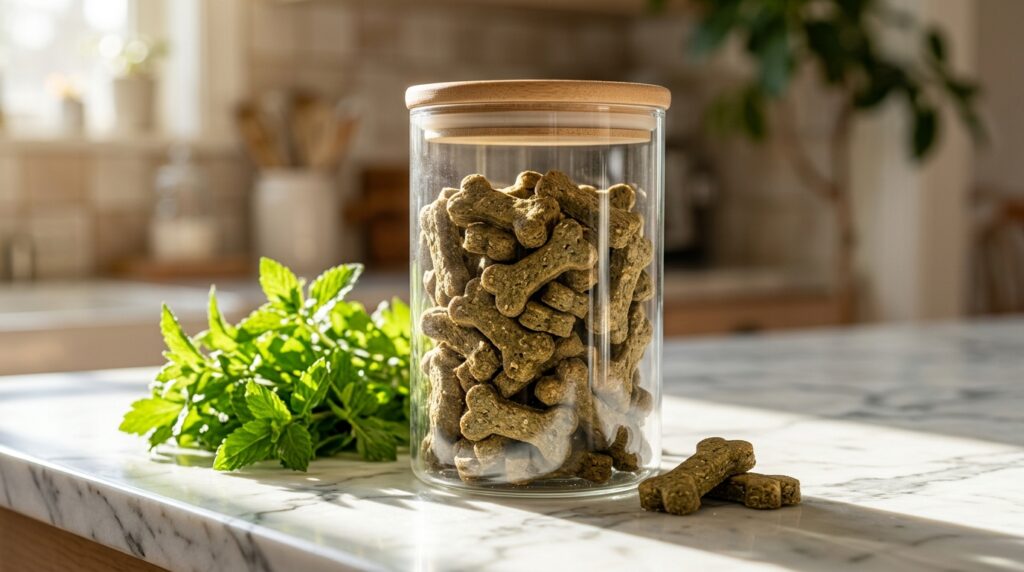
Choosing a new supplement for a dog requires more than checking the flavor or reading a few customer reviews. Ingredients, product concentration, existing health conditions, and the reliability of the manufacturer all affect whether a product is suitable for an individual animal. Pet owners researching CBD Dog Treats should begin by understanding what the label actually describes and what scientific research can reasonably support.
Cannabidiol, or CBD, comes from cannabis plants, including varieties of hemp. It differs from THC, the compound responsible for the intoxicating effects associated with marijuana. CBD itself does not produce the same typical intoxicating response, but that distinction does not make every CBD product harmless to dogs. Contamination, inaccurate labeling, inappropriate ingredients, and interactions with medication remain possible concerns.
Read the Label Before Comparing Products
The front of a package often emphasizes hemp extract, natural ingredients, or a particular flavor. The back label usually provides more useful information. Check whether the stated milligrams refer to CBD alone, total hemp extract, or the entire container. Those quantities describe different things.
For example, a package containing 300 milligrams of CBD across 30 equally dosed treats would provide 10 milligrams per treat. A package that lists 300 milligrams of hemp extract may contain considerably less CBD if the extract includes other compounds. Without a clear breakdown, the actual amount can be difficult to determine.
Details that deserve attention
- CBD content per individual treat, rather than only the package total.
- The complete ingredient list and any declared allergens.
- The manufacturer’s name, contact information, and batch identification.
- A current certificate of analysis from an independent laboratory.
- Testing results for cannabinoid content and relevant contaminants.
- Instructions for storage, use, and disposal after the product expires.
A laboratory report should correspond to the exact product and preferably its specific batch. It should identify the testing laboratory and provide measurable results. If a company cannot explain where its report came from or how it matches the product, the claim deserves caution.
The absence of a strong smell, an attractive package, or a high price does not prove purity. Laboratory testing provides more useful evidence than appearance alone.
Understand concentration and serving size
Milligrams of CBD and the weight of a treat are separate measurements. A large biscuit may contain the same amount of CBD as a small chew. The treat’s size therefore cannot be used to estimate its cannabinoid strength.
Consider a hypothetical product with 5 milligrams of CBD per piece. Giving two pieces would provide 10 milligrams, assuming the pieces contain the stated amount and are evenly formulated. This arithmetic explains label concentration, but it is not a dosing recommendation. The appropriate amount for a dog has not been established for every condition or commercial formulation.
What Research Says About CBD for Dogs
Scientific interest in canine CBD has grown, particularly in studies of osteoarthritis and other sources of discomfort. Research remains uneven, and results depend on the product, study design, duration, and condition being examined.
A 2018 study published in Frontiers in Veterinary Science evaluated CBD oil in dogs with osteoarthritis. Researchers reported improvements in certain pain and activity measures during the study. The findings were encouraging enough to support further investigation, but the study did not establish that all CBD products are effective.
Commercial treats introduce additional variables. Their ingredients may influence absorption, and their CBD content may differ from the formulations used in clinical studies. A result obtained with a specific oil cannot automatically be transferred to a flavored chew.
Mobility concerns require a proper assessment
A dog that moves slowly after resting may have joint disease, muscle soreness, an injury, or another medical problem. Changes in movement can also develop gradually, which makes them easy to attribute to aging.
Watch for signs such as:
- Hesitation before jumping onto furniture or entering a vehicle.
- Difficulty standing after a nap.
- Reduced interest in walks or play.
- Stiffness after exercise.
- Limping, repeated licking of a joint, or reluctance to use a limb.
These observations help a veterinarian assess the problem. Sudden inability to bear weight, severe pain, or a major change in mobility warrants prompt veterinary attention.
Anxiety claims need careful interpretation
Some products advertise CBD for fireworks, thunderstorms, travel, or separation-related distress. Evidence that CBD reliably treats canine anxiety remains insufficient.
A frightened dog may benefit from a quiet resting area, reduced exposure to triggers, gradual behavior training, or medication prescribed by a veterinarian. Severe anxiety can require a structured treatment plan rather than an edible supplement alone.
The timing also matters. A treat may not act quickly enough for an unexpected stressful event, and an owner cannot assume that a product will have the same effect each time. A veterinarian can help distinguish situational fear from pain or another health problem that affects behavior.
Safety, Medication, and Regulatory Questions
CBD can cause side effects in dogs, including sleepiness, gastrointestinal upset, and changes in appetite. Research has also identified increases in certain liver enzyme measurements during CBD use. An elevated enzyme result does not automatically mean severe liver damage, but it can indicate a need for monitoring and veterinary interpretation.
Dogs that receive several medications deserve particular care. CBD may affect the enzymes involved in metabolizing certain drugs, which can alter their effects or increase adverse reactions. A veterinarian should review all current medications and supplements before CBD is introduced.
Keep dangerous ingredients out of reach
Xylitol is especially hazardous to dogs. It can trigger a dangerous drop in blood sugar and, in some cases, liver injury. Chocolate, grapes, and raisins are also unsafe. Human edibles and homemade cannabis treats should never be assumed suitable for pets.
THC exposure can cause significant illness in dogs. Warning signs include unusual sleepiness, loss of coordination, urinary accidents, tremors, and changes in responsiveness. Suspected exposure calls for immediate veterinary guidance. Do not wait for every symptom to appear.
Check the legal and regulatory status
Rules for hemp-derived animal products vary by jurisdiction. In the United States, the U.S. Food and Drug Administration has stated that CBD products have not been approved for use in animals and has raised concerns about safety, product quality, and the evidence supporting claims. A product’s availability for sale does not establish FDA approval.
Consumers in other countries should check the requirements of their own regulatory authorities. Import restrictions and rules for animal supplements may differ from those that apply to ordinary pet food.
Final Thoughts
Selecting a CBD treat requires a clear label, reliable laboratory testing, careful attention to ingredients, and advice from a veterinarian. Research on specific canine conditions offers some encouraging findings, but it does not establish that every commercial treat works or is safe. If a dog’s symptoms are new, persistent, or worsening, identifying the cause should come before experimenting with a supplement.